It’s impossible to predict how an applicant will behave once you accept them as your tenant. Insight from a previous landlord can provide clues about what you can expect, whether positive or negative.
Conducting a landlord reference check will allow you to learn:
In this article, we’ll outline which questions to ask landlords and why it’s crucial to ask them.
Before reaching out to do a landlord reference check, it’s essential to consider exactly how far back you need to delve into the past. Should you just stick to the most recent landlord? Or is it better to contact multiple landlords?
In most cases, the best tactic is to contact an applicant’s current landlord (assuming they still need to move out) and at least one previous landlord.
Interviewing at least two landlord references will enable you to obtain enough details about an applicant’s present circumstances and get to know them as a person and renter.
Why two? The reason is that one landlord’s perspective and opinion about the application may be misleading.
For example, the current landlord may have engaged in fierce arguments with them over late rent payments and property damage they caused. The landlord may be frantically trying to get rid of them. The opposite scenario can occur, too. For instance, the current landlord may have a personal vendetta against the applicant over something frivolous.
In both scenarios, the feedback you receive while completing a landlord reference check might be skewed.
Remember: not all landlord references are reliable. This is why getting a second opinion from at least one other landlord is wise. You’ll get a more accurate picture of the applicant and their rental history.
Contacting at least two landlords will also allow you to confirm basic details about the applicant, such as name, length of tenancy, current address, for consistency. You can also cross-reference this information with the details provided by the applicant on their rental application form.
There’s no need to conduct a long-winded interview with a landlord. Typically, only a few inquiries will provide you with the details you need to make a reliable assessment of your applicant. The following list of questions is a great starting point if you need help deciding what to ask. You can also download this landlord reference check cheat sheet.
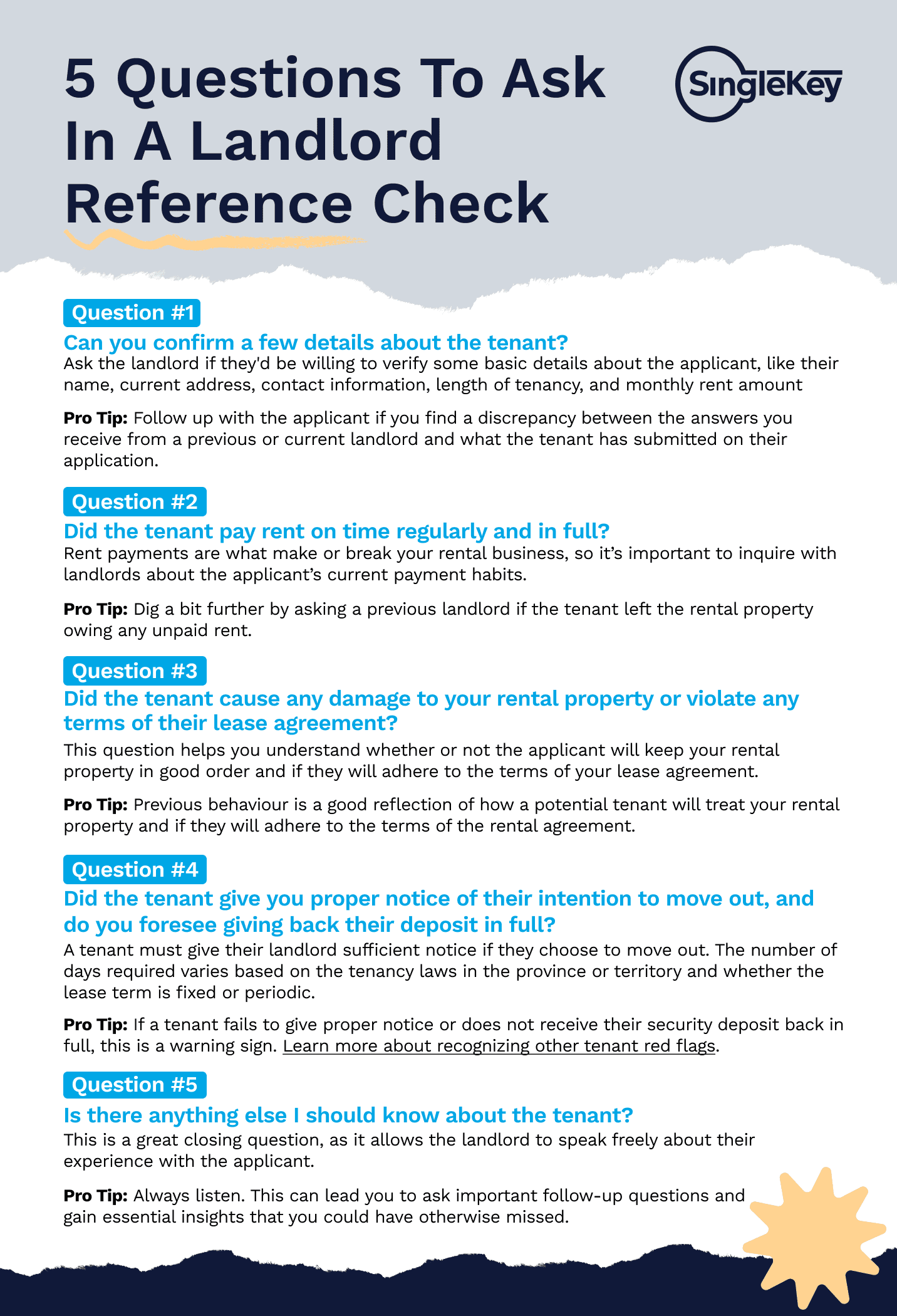
A great way to begin your interview is to ask the landlord if they’d be willing to verify some basic details about the applicant. These include, but are not limited to, the following:
Asking this question will allow you to determine if the applicant has been honest and transparent regarding the information that they’ve disclosed to you.
Pro Tip: Follow up with the applicant if you find a discrepancy between the answers you receive from a previous or current landlord and what the tenant has submitted on their application.
Rent payments are what make or break your rental business, so it’s important to inquire with landlords about the applicant’s current payment habits.
This will help you assess how responsible they are and what you can expect should you offer them a lease agreement.
Suppose the landlord mentions that the applicant paid rent late on one occasion. In that case, you can ask follow-up questions to learn why the situation occurred and the outcome:
If the answer is yes to all three questions, that’s a good sign the applicant is honest and dependable.
Pro Tip: Dig a bit further to understand a prospective tenant’s rental payment history. Ask if the tenant left the rental property owing any unpaid rent.
While the most important attribute in a tenant is the ability to pay rent on time, you also want them to keep your rental property in good order. And, of course, they must adhere to the terms of your lease agreement.
As a result, it’s wise to include this question in a landlord reference check so you can understand how well the applicant cared for the property and if they will follow the terms of the lease agreement.
You could also face complaints from neighbours if your tenant is disruptive or threatening. A messy living space can lead to health, safety, and fire code violations in extreme cases.
Pro Tip: Previous behaviour is a good reflection of how a potential tenant will treat your rental property and if they will adhere to the terms of the rental agreement.
A tenant must give their landlord sufficient notice if they choose to move out. The number of days required varies based on the tenancy laws in the province or territory and whether the lease term is fixed or periodic.
For example, in Ontario, if a tenant rents month-to-month, they must give their landlord 60 days’ notice when moving out.
Pro Tip: If a tenant fails to give proper notice or does not receive their security deposit back in full, this is a warning sign. Learn more about recognizing other tenant red flags.
This is a great closing question, as it allows the landlord to speak freely about their experience with the applicant. In doing so, they may share some crucial details that will make your decision easier.
In addition, since you’re not pressuring the landlord to answer any specific questions, some of which may be sensitive, you don’t need to worry about breaching any privacy laws.
Pro Tip: Always listen. Take the time to digest the information you get during a landlord reference check. This can lead you to ask important follow-up questions and gain essential insights that you could have otherwise missed.
As the saying goes, “Actions speak louder than words.” And one of the best ways to gather factual details about an applicant’s personality, habits, and tendencies is by speaking with their current and past landlords.
While a landlord reference check is a vital aspect of the tenant screening process, you should never rely solely on it as the deciding factor for accepting or denying an applicant.
Screening a prospective tenant involves several steps, including interviewing the individual, verifying their employment, and running credit and background checks with a tenant report. Analyzing these factors alongside a landlord reference check will provide a more complete picture of a potential renter’s suitability.