Create a lease for your tenancy, add terms and get it signed online for free
Protect against unpaid rent, damage, and eviction costs
Collect rent automatically via Interac or PAD
Create a lease for your tenancy, add terms and get it signed online for free
Pre-screen applicants before scheduling viewings
Screen tenants, protect rent, and manage your portfolio
Credit, income, background, and eviction checks
Approve more renters and fill vacancies faster
Create, sign, and organize leases across properties with less admin
Screen tenants and protect your clients’ rental income
Credit, income, background, and eviction checks
Protect clients against unpaid rent and damage
Create professional leases quickly with province ready forms and free e-signing
Explore rental market insights, tips, and guides
Download free lease templates for your province
Download free rental application forms
Check if an applicant’s income can cover rent
Understand rental laws in your province
Credit, income, background, and eviction checks
Protect against unpaid rent, damage, and eviction costs
Collect rent automatically via Interac or PAD
Create a lease for your tenancy, add terms and get it signed online for free
Pre-screen applicants before scheduling viewings
Credit, income, background, and eviction checks
Protect against unpaid rent, damage, and eviction costs
Collect rent automatically via Interac or PAD
Create a lease for your tenancy, add terms and get it signed online for free
Pre-screen applicants before scheduling viewings
Credit, income, background, and eviction checks
Protect against unpaid rent, damage, and eviction costs
Collect rent automatically via Interac or PAD
Create a lease for your tenancy, add terms and get it signed online for free
Pre-screen applicants before scheduling viewings
Credit, income, background, and eviction checks
Protect against unpaid rent, damage, and eviction costs
Collect rent automatically via Interac or PAD
Create a lease for your tenancy, add terms and get it signed online for free
Pre-screen applicants before scheduling viewings
Screen tenants, protect rent, and manage your portfolio
Credit, income, background, and eviction checks
Approve more renters and fill vacancies faster
Create, sign, and organize leases across properties with less admin
Screen tenants, protect rent, and manage your portfolio
Credit, income, background, and eviction checks
Approve more renters and fill vacancies faster
Create, sign, and organize leases across properties with less admin
Screen tenants and protect your clients’ rental income
Credit, income, background, and eviction checks
Protect clients against unpaid rent and damage
Create professional leases quickly with province ready forms and free e-signing
Screen tenants and protect your clients’ rental income
Credit, income, background, and eviction checks
Protect clients against unpaid rent and damage
Create professional leases quickly with province ready forms and free e-signing
A look at Canada’s average renter profile, affordability, and risk trends based SingleKey’s renter data.
Explore rental market insights, tips, and guides
Download free lease templates for your province
Download free rental application forms
Check if an applicant’s income can cover rent
Understand rental laws in your province
A look at Canada’s average renter profile, affordability, and risk trends based SingleKey’s renter data.
Explore rental market insights, tips, and guides
Download free lease templates for your province
Download free rental application forms
Check if an applicant’s income can cover rent
Understand rental laws in your province
When it comes to rental property repairs, there are some jobs you can handle on your own and others best left to seasoned professionals.
In this guide, you’ll find key questions to ask when deciding whether to do it yourself or hire help. We’ll also explain the benefits and drawbacks of each option and share perspectives from homeowners and real estate experts on both sides of the DIY and hire a pro fence.
Before you grab your toolbox or call a tradesperson, take our quiz to help you decide how to approach your repair work.
Still unsure about whether you should handle the repair yourself? Here are some questions you should ask to ensure you’re making a wise business decision.
When assessing the time commitment, be sure to account for specific constraints, such as:
Have you crunched the numbers and realized you face an enormous repair bill? In such cases, it’s perfectly natural to lean more toward the DIY option. Refer to your rental maintenance budget to see if doing the work yourself is feasible.
Labor usually makes up the bulk of a contractor’s repair bill, so you can save significant money by taking on the repairs personally. However, ensure you calculate the cost of materials, supplies, tools, and equipment, as well to see the full financial picture.
Be honest and assess whether you have the right mix of skills to complete the repairs at hand.
Do you have the knowledge and experience to perform the task? Are you comfortable handling any necessary tools and machinery? Have you done a similar project in the past? Can you do the work safely without endangering yourself, your tenants, or your rental?
If you answered “no” to these questions, you’ll be better off handing the reins to a professional.
Generally, the more complex the repairs, the better off you’ll be letting a professional tradesperson take charge of the task.
Rental maintenance tasks that require little knowledge, basic tools, and few steps to complete are good DIY repair candidates. Some examples of simple repairs include patching small holes in walls, replacing a damaged shelving unit, and repainting scratched surfaces.
On the other hand, some repairs require deep knowledge, extensive labor, or pose safety hazards. These include removing mold, replacing windows, repairing foundation cracks, installing new electrical wiring, replacing water pipes, and repairing the roof.
It’s important to note that some repair and maintenance work requires obtaining a local permit or possessing a special license. If that’s the case, there’s a good chance a professional is not only more suitable financially—they’re the only one who can legally carry out the work.
Benefits: By doing the work yourself, you avoid the labor costs that professional contractors charge. You can also shop around to get the best deals on materials and supplies for the project. While a professional can do the same, they may charge a markup, which increases your expenses.
Risks: Just because DIY repairs tend to be cheaper than hiring a professional doesn’t mean you’ll save money in the end. Doing the work alone can take longer than anticipated, leading to higher expenses. For example, you might have to redo specific tasks multiple times until you get them right, so you’ll spend more on materials and supplies.
Benefits: If you’re a DIY enthusiast who’s very particular about details, you’ll have greater peace of mind being at the helm of your own project. This frees you from the constraints of a contractor’s work schedule.
Risks: Completing the job may take you more time than a qualified professional. You may need to spend hours researching how to execute the repairs while hunting down the right tools and materials. And there could be hidden issues that emerge once you begin the repairs, which may require more time for the project than anticipated.
Benefits: You’ll understand how your rental property works and what it takes to maintain it. You can also apply this knowledge to repairs at your personal residence.
Risks: Many rental maintenance projects appear easy at first glance. But once you get to work, the complexity of the repairs and grueling physical demands become apparent. Even applying peel-and-stick wallpaper or installing tiles on the bathroom floor are deceptively tricky tasks to execute properly.
You also assume liability for any accidents that occur along the way. If someone gets hurt, you could also face a lawsuit and medical and legal bills.
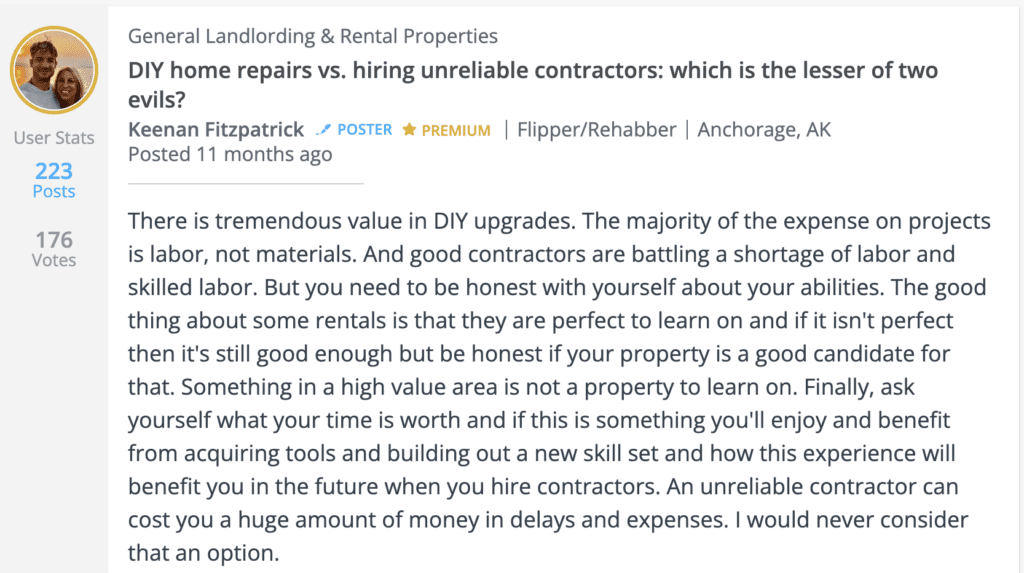
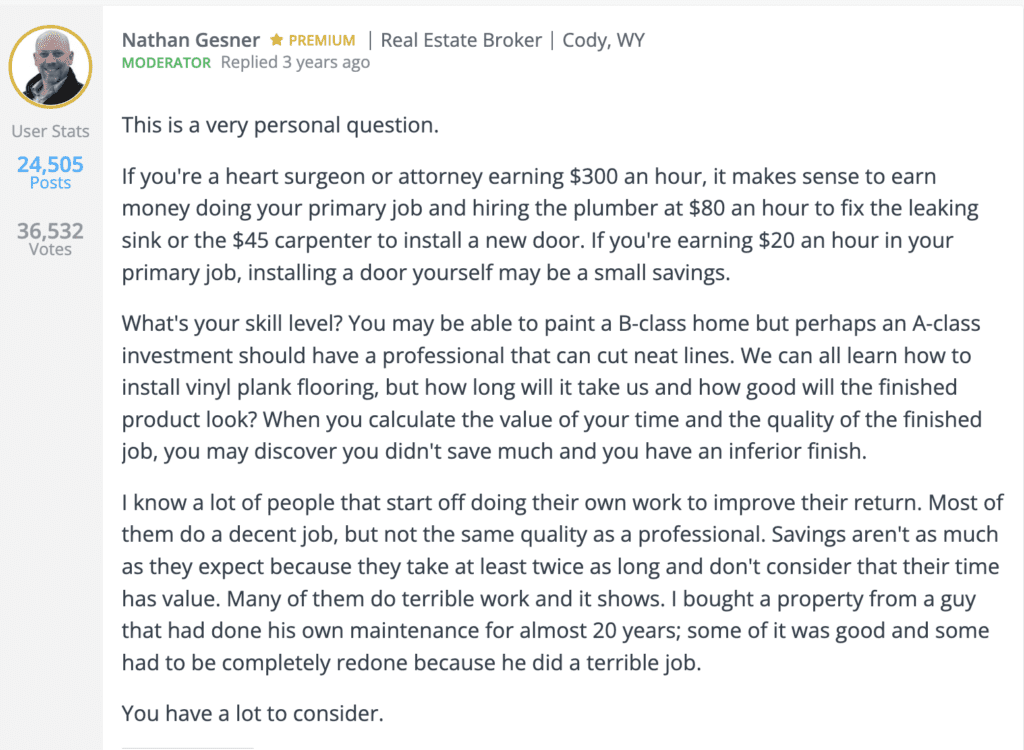
Here’s what one real estate pro had to say about the value of doing repairs yourself:
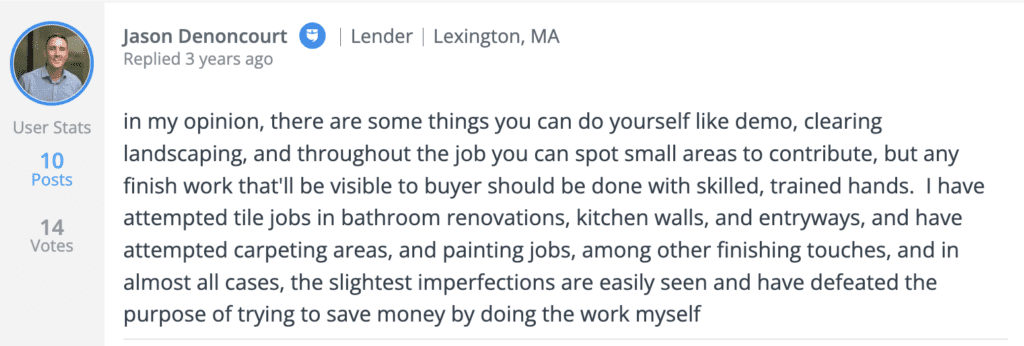
And here’s how one real estate broker sees the debate:
Benefits: Qualified and reputable contractors provide warranties and insurance for their work. You can rest easy knowing the project will be done safely and in compliance with local ordinances (building codes, electrical safety standards, etc.).
Risks: These qualifications come at a cost. A contractor may charge you a higher hourly rate than one you’d charge for doing the same work yourself. There may also be markups for materials, tools, and equipment.
Benefits: If you have a packed schedule, outsourcing the work to a professional is the right choice. In doing so, you can prioritize your day job, spend more time with your family, or focus on other aspects of your rental business.
Risks: A professional contractor may not follow your exact specifications, resulting in work that doesn’t align with your expectations. They may also cut corners to save time and adjust their schedules according to their needs. This can be a problem if you want to fill a vacancy quickly but the repair work is delayed.
Benefits: Professional tradespeople will do the job right the first time (provided they’re competent and reliable), so you don’t have to worry about spending more to redo shoddy work. They’re also more likely to secure discounts on materials as they order them in bulk.
Risks: No matter how much due diligence you do, there’s always the risk that you’ll choose a contractor who’s unsuitable for the project, leading to poor-quality work. In the worst case, a contractor may employ shady tactics, such as billing you far above the average market rate or doing more work than is necessary to justify an inflated invoice.
Here’s one homeowner’s experience working on his own repairs:
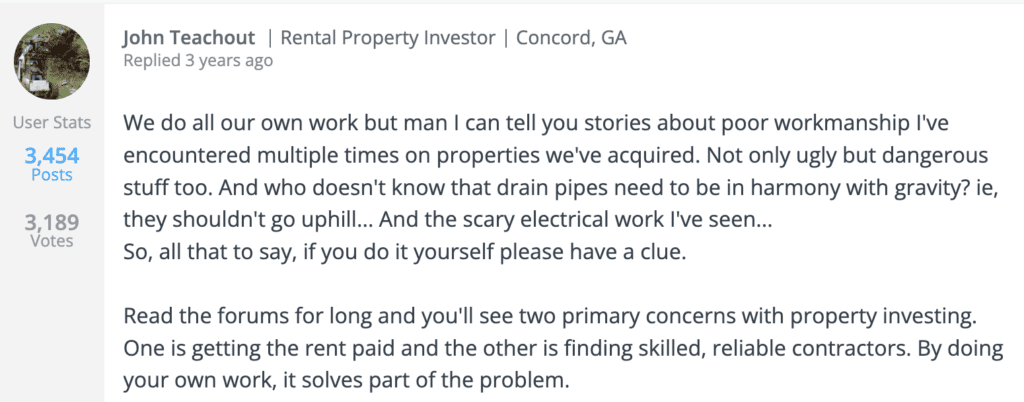
And here’s what a rental property investor had to say about the importance of finding reliable contractors:
Deciding whether to go the DIY route or hire a pro isn’t a decision to take lightly. Whatever choice you make can significantly impact your bottom line, tenant satisfaction, and the long-term value of your rental.
If you decide a repair is too complex or dangerous to carry out independently, or if the work requires specialized skills and tools, explore our maintenance resources and find out how to hire and work with the right tradespeople.