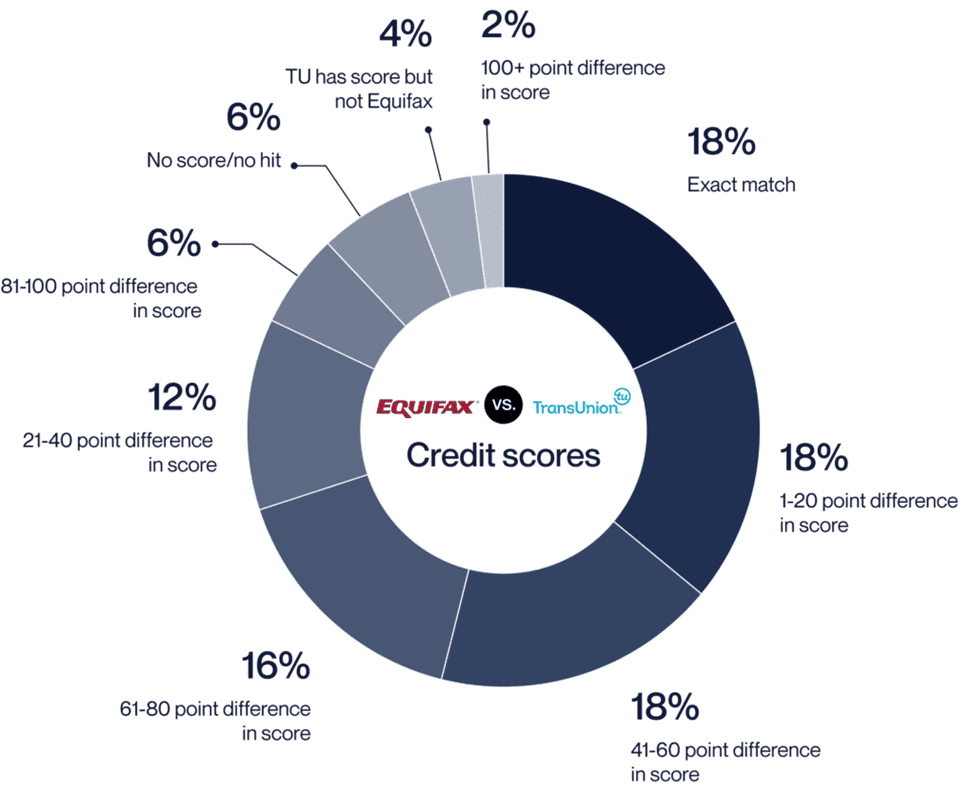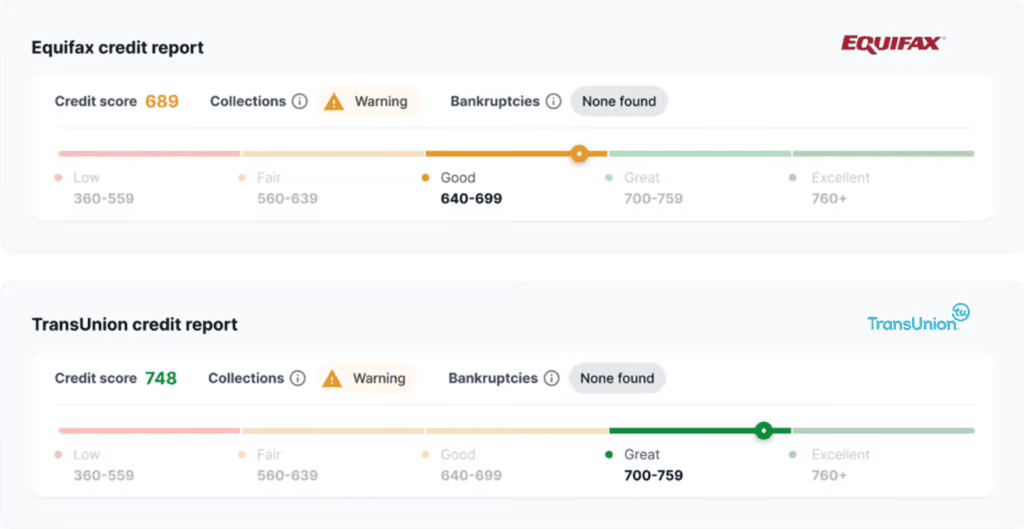

Equifax and TransUnion are separate credit bureaus. Each uses distinct credit-scoring algorithms and has its own policy for collecting and managing credit information. As a result, two credit reports for the same applicant can look surprisingly different. For example, SingleKey found that credit scores differed by more than 40 points in 42% of cases.
Neither credit bureau is inherently better or more accurate than the other. But understanding how and why their credit reporting differs can help you make smarter decisions about tenant selection. In this article, we’ll break down the key differences between Equifax and TransUnion and why it’s wise to use both when screening tenants.
Equifax vs TransUnion at a glance
Equifax and TransUnion operate in the same industry and share the same goal of collecting, processing, and reporting credit information. Below is a comparison of the two from a landlord’s perspective, highlighting the similarities and differences.
| Area | Equifax | TransUnion | Landlord takeaway |
|---|---|---|---|
| Credit-scoring model | Equifax Risk Score 3.0 and customized FICO models | CreditVision and VantageScore models | Scores can differ even when based on similar information. SingleKey found differences over 40 points in 42% of cases. |
| Credit history considered | 81 months | 84 months | Different scoring windows can produce different scores. |
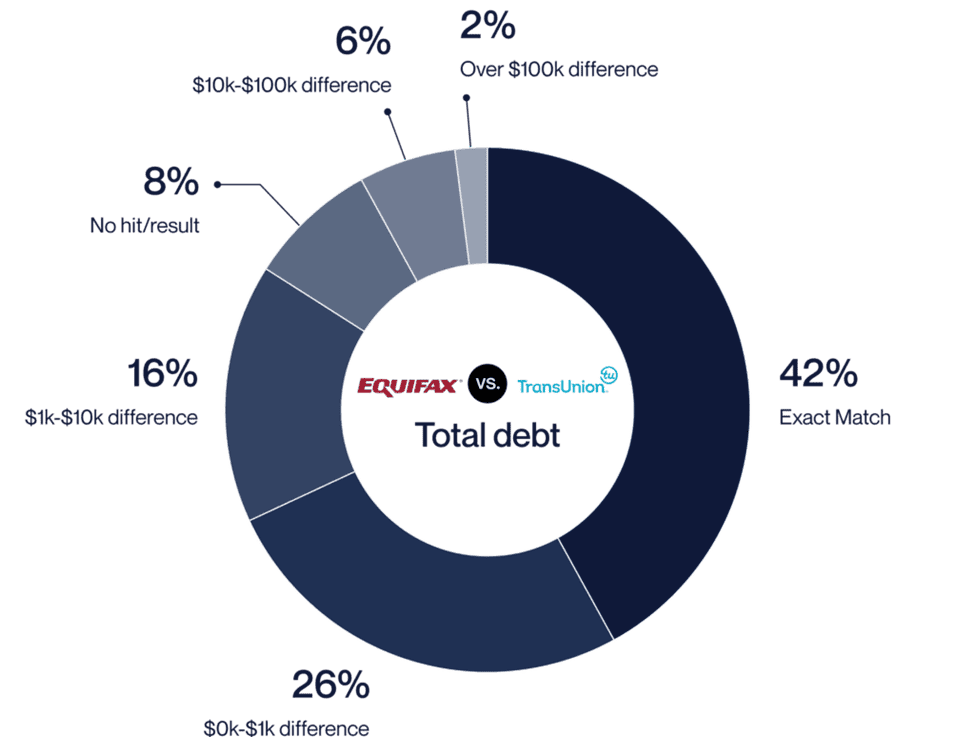
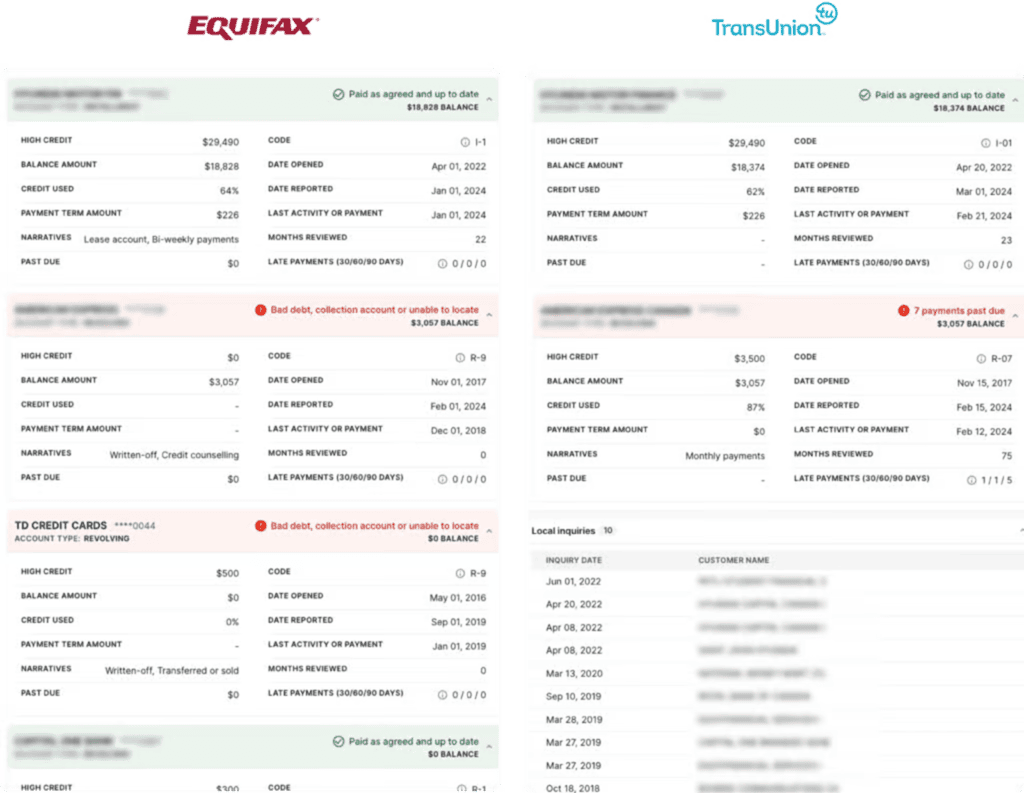
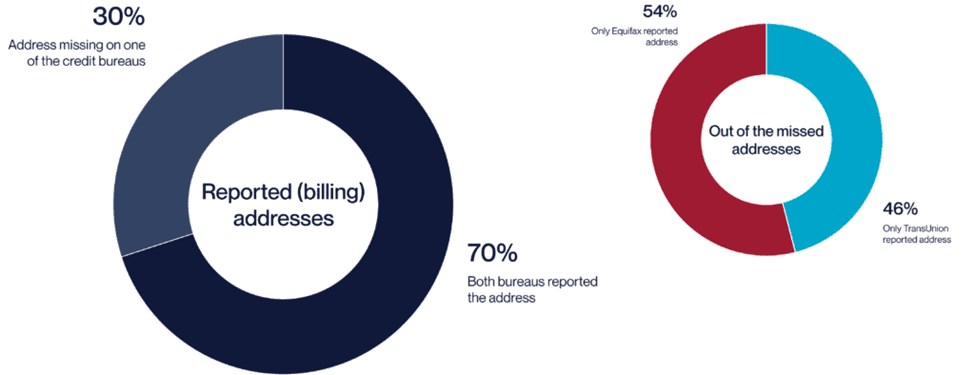
| Data sources | Information reported to Equifax | Information reported to TransUnion | Reviewing only one bureau may leave out an account. SingleKey found a 55% chance of this happening. |
| Hard inquiries retained | 3 years | 6 years | Hard inquiries remain visible longer on TransUnion reports. |
| Positive information retained | Indefinitely, or 10 years for closed accounts | 20 years | A longer positive history may contribute to a stronger score. |
| Negative information retained | Up to 6 years | Up to 6 years; some bankruptcies remain longer | What appears may vary by bureau and province. |
Equifax vs TransUnion for tenants vs landlords
Credit reports are vital to both landlords and tenants during the screening process. Both parties care about what information the report communicates. However, they have different priorities, which can lead them to prefer one credit bureau over the other.
What tenants look for
Tenants primarily care about the accuracy of their credit reports, especially if they manage their money responsibly. The reason is that an up-to-date, accurate credit report increases the chance of securing a tenancy.
For example, let’s say a tenant owes on a car loan and routinely pays on time. In that case, they would expect to see all of their on-time payments on their report with no errors or omissions.
In addition, tenants are concerned about which credit bureau a landlord checks. The reason is that one may paint them in a more favourable light, giving them an edge over other applicants.
In Canada, rent-payment information may be reported to Equifax, TransUnion, or both, depending on the rent-reporting provider. A tenant who has worked to build their credit history through rent reporting may prefer that a landlord review the bureau file where those payments appear.
What landlords look for
Landlords are primarily concerned with an applicant’s payment history and the amount of debt they owe relative to their income. These metrics allow them to assess the risk that an applicant will fail to pay rent on time. However, landlords also examine other factors during the screening process, such as employment stability, background checks, and references from past landlords.
Which credit bureau do landlords use?
In Canada, landlords may use Equifax, TransUnion, or both. When running a credit check on tenants , practices vary: some landlords prefer one credit bureau, while others review reports from both agencies to get a more complete picture of each applicant.
What we found comparing hundreds of Equifax and TransUnion reports
At SingleKey, we analyzed hundreds of Equifax and TransUnion credit reports to see how the two compare in the information they provide. Below is a summary of our key findings to help you decide whether to use one or the other, or both, for screening tenants.