
Credit, income, background, and eviction checks
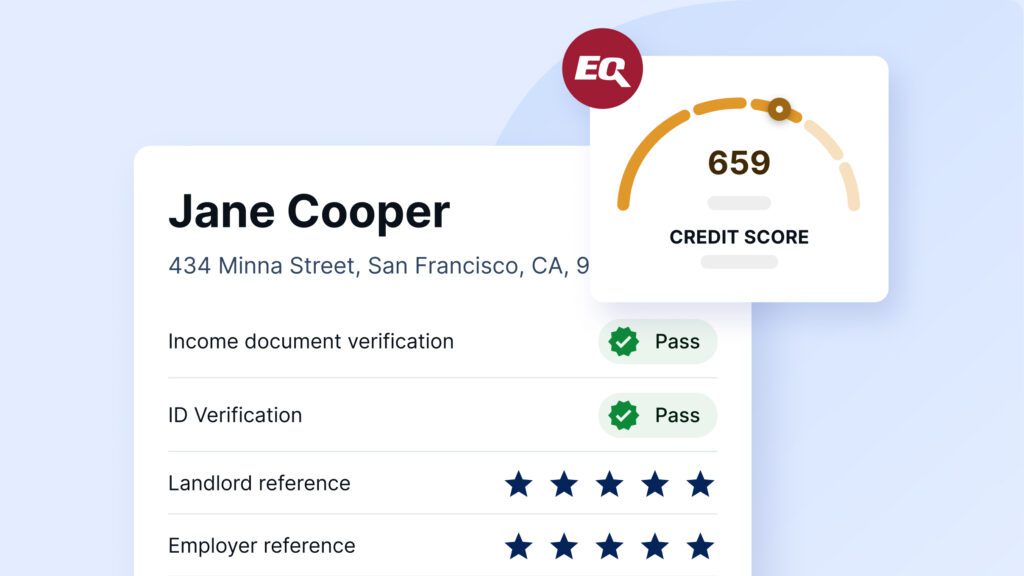
Full credit check by Equifax®, including employment and income information
Landlord and employer reference checks
AI-powered tool that scans your applicant’s income documents for tampering or fraud
Protect against unpaid rent, damage, and eviction costs
See what customers say about Rent Guarantee
Screen tenants, protect rent, and manage your portfolio
Credit, income, background, and eviction checks
Approve more renters and fill vacancies faster
Screen tenants and protect your clients’ rental income
Credit, income, background, and eviction checks
Protect clients against unpaid rent and damage
Full credit check by Equifax®, including employment and income information
Landlord and employer reference checks
AI-powered tool that scans your applicant’s income documents for tampering or fraud
Verify the legitimacy of your applicant’s ID
Qualify tenant inquiries before viewings
Full credit check by Equifax®, including employment and income information
Landlord and employer reference checks
AI-powered tool that scans your applicant’s income documents for tampering or fraud
Verify the legitimacy of your applicant’s ID
Qualify tenant inquiries before viewings
Protect against unpaid rent, damage, and eviction costs
See what customers say about Rent Guarantee
Alaska earned its nickname “The Last Frontier” thanks to its vast, untouched landscapes and rich wildlife. From Ketchikan, a charming waterfront adorned with totem poles, to Kodiak, home of the mighty Kodiak bears and a prime spot for viewing the Northern Lights in the fall, Alaska offers a unique allure that has sparked the imagination of artists and tourists alike.
Owning vacation rental properties in Alaska offers short-term rental (STR) owners promising opportunities. Learn how to maximize tax deductions to save the most money during tax season.
Hosting guests for fewer than 30 days in a row is a short-term rental. Renting in Alaska, primarily through Airbnb and VRBO, requires an Alaska Business License for renting out various spaces like in-law suites or individual rooms. Businesses must register before obtaining their license from the Alaska Business License.
Every tax year begins on January 1 and concludes on December 31, with individual tax returns typically due by April 15 in the U.S. Rental income is taxable income.
The Internal Revenue Service (IRS) counts any money earned from a short-term rental as taxable income. If you rent through Airbnb or VRBO, talk to a tax professional to find out if you need to submit a tax form, like a W-9, to them.
When your guests spend more than 14 days per year in your short-term rental properties, the IRS considers those earnings taxable income, necessitating proper reporting. However, homeowners can claim exceptions, such as mortgage interest and real estate taxes, and retain their deductibility irrespective of rental activity.
Use a Schedule E Form 1040 or a Form 1040-SR, specifically designed for individuals aged 65 and older. For a comprehensive overview of the tax reporting procedure, consult our guide on reporting rental income using the Schedule E 1040 Form.
Streamline the reporting of your earnings and business expenses with these simple and efficient steps.
It’s essential to have a written record detailing the time invested in repair and maintenance, along with the corresponding costs related to rental activity. Simplify the reporting process by compiling an itemized list of deductions to be included on the 1040 Form.
The difference between passive and active income is distinguished by how involved the property owner is in providing services for the rental property. Passive income involves minimal day-to-day engagement facilitated through online booking platforms like Airbnb and VRBO. In contrast, active income entails a more hands-on approach, where rentals generate income with a significant effort by the short-term rental operator.
When you rent out your vacation home through Airbnb, find out if you need to submit a W-9 Form to Airbnb. Otherwise, Airbnb legally must withhold 28% of your rental money for taxes.
When you report your earnings, whether it’s a passive or active income, use the 1040 Form to itemize your deductible expenses.
Various deductions can impact your tax liabilities. Some potential deductions you can claim on your tax return that are worth highlighting include property taxes, mortgage interest, travel expenses, business activity, routine rental expenses like cleaning and providing meals, and maintenance costs. Business expenses such as property management fees are eligible for deductions.
The current statewide sales tax rate in Alaska is 0%. However, individual municipalities establish their own tax rates. Anchorage has no sales tax, but the tax regulation authorizes vacation rental owners to collect a room tax of 12%.
In Alaska, each town may have its own rules for short-term rentals, like occupancy limits, permits needed, and taxes to pay. Check with your local government to ensure you’re playing by the rules for tax planning purposes.
However, if you are receiving business income, including rental income for an STR, you must apply for a business license in Alaska.
Yes. Airbnb is an online marketplace for accommodation sharing, allowing individuals to rent out their properties or spare rooms to guests. Earning rental income through Airbnb constitutes business activity, and obtaining an Alaska Business License is necessary.
Renting an STR can be profitable if you know how to make the most of tax deductions. If you’re uncertain about diving into the responsibilities of long-term rentals or prefer earning a passive income on vacation rentals for shorter periods, take a look at our guide to see what aligns with your preferences.