
Credit, income, background, and eviction checks
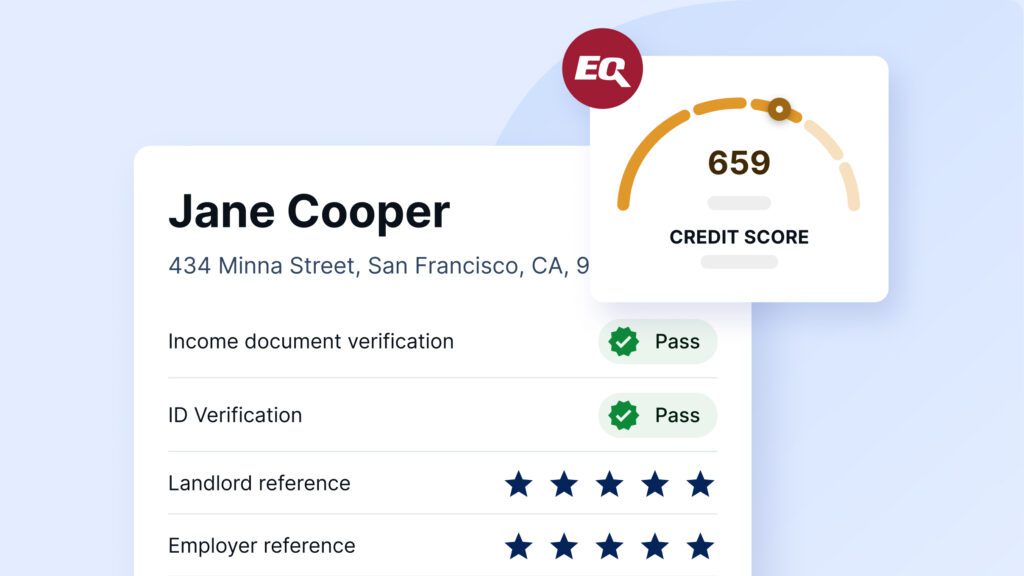
Full credit check by Equifax®, including employment and income information
Landlord and employer reference checks
AI-powered tool that scans your applicant’s income documents for tampering or fraud
Protect against unpaid rent, damage, and eviction costs
See what customers say about Rent Guarantee
Screen tenants, protect rent, and manage your portfolio
Credit, income, background, and eviction checks
Approve more renters and fill vacancies faster
Screen tenants and protect your clients’ rental income
Credit, income, background, and eviction checks
Protect clients against unpaid rent and damage
Full credit check by Equifax®, including employment and income information
Landlord and employer reference checks
AI-powered tool that scans your applicant’s income documents for tampering or fraud
Verify the legitimacy of your applicant’s ID
Qualify tenant inquiries before viewings
Full credit check by Equifax®, including employment and income information
Landlord and employer reference checks
AI-powered tool that scans your applicant’s income documents for tampering or fraud
Verify the legitimacy of your applicant’s ID
Qualify tenant inquiries before viewings
Protect against unpaid rent, damage, and eviction costs
See what customers say about Rent Guarantee
Many scenarios take shape once a landlord starts screening a potential tenant. For instance, after screening their top applicants, they must choose their renters and draft a lease agreement. Landlords are also often confronted with unexpected repairs once the tenants move in and must maintain habitable conditions throughout the lease term.
Keeping a list of essential rental documents will help landlords stay organized for any event, including giving notices for repairs, inspections, drafting lease renewals, and rent increases.
During the residential property showing, you’ll get the opportunity to have a face-to-face interview with prospective tenants to get a glimpse into who you could be renting to. Once they submit their application, you’ll continue researching your potential renter through a tenant screening report. SingleKey’s Tenant Report provides valuable information to the landlord that will reveal the applicant’s credit history, monthly income, annual income, and rental history.
Here are the personal documents you can ask for during the screening process:
Explore this sample of a credit check to see what you can learn about a rental applicant.
If the applicant has massive debt and an insufficient rent-to-income ratio, you can make an informed decision on whether you should approve the applicant. In Georgia, you may require a non-refundable application fee.
Getting everything in writing is critical. Here are the templates for the most essential documents for you to download and start the leasing process:
In the rental agreement, you can spell out how much the rent payments are, when the rent is due, late rent fee charges, the lease term dates, the cost of the security deposit, and other landlord and tenant maintenance responsibilities.
Typically, the tenant pays the security deposit when they sign the lease agreement. However, it’s not uncommon, especially in a competitive rental market, for landlords to collect a holding deposit. This deposit is non-refundable, unlike a standard deposit.
Before the approved tenant moves in, the landlord and tenant should conduct an initial move-in inspection where you both log any damages on the property. Once the lease is up, the inspection log will prove helpful to see how much of the security deposit you should refund.
There are a lot of responsibilities that come with managing a real estate investment. Unexpected things happen, like leaks, fallen trees, and having to cover the cost of repairs when the tenant is not at fault. Landlords are responsible for understanding and adhering to state laws.
For instance, if a tenant submits a written repair request, the landlord usually provides notice for entering the property to address the repairs.
Georgia has no statewide rent control law. However, the landlord can only raise the rent after the fixed-term lease is up. The lease term expiration should be stated on the lease form. Landlords should negotiate the new lease before the lease expires. If the tenant remains at the rental and the landlord continues to collect rent, the original terms stated in the lease document still apply. However, the landlord can terminate the lease or apply a rent increase but must give at least 60 days of notice.
As a recap, a lease in Georgia will automatically renew. The landlord can end the lease or raise the rent after the lease expires. They have two options: they can write new terms giving the tenant advanced notice prior to the lease renewal, or they can continue collecting rent and will need to provide the tenant with a 60-day notice if they plan to raise the monthly rent or wish to end the lease.
If the tenant stops paying their monthly rent, that is just cause for the landlord to try and evict. The tenant has seven days to pay the rent, and if they do so, they may remain in the rental until the lease expires. The caveat here is the tenant can only do this once. As a landlord, you do not have to accept late payments again before filing for eviction. Nonpayment of rent is grounds for eviction. The landlord must go through the court to obtain a dispossessory affidavit (eviction notice).
A landlord should provide habitable conditions for each rental unit. There are fair housing opportunities in Georgia that prohibit property managers from refusing to rent or falsely denying the availability of rentals. The Georgia Fair Housing Act prohibits discrimination and intimidation.
Property managers must provide water, heating, and air conditioning, and they must equip the rental with smoke detectors. Tenants must also be notified of lead-based paint hazards.
All tenants are likely to go through a screening process where they will need to complete a printed or online application and provide the following:
They also must have good credit.
They can only raise the rent during the lease term if it is specified in the lease agreement. The landlord must also complete specific maintenance duties to uphold the building structure. There are some maintenance agreements for landlords to specify in the lease, including seasonal maintenance, significant repairs of property damage not caused by the tenant, flooding, or damages caused by natural disasters.
Having all the necessary rental agreements and documents in one place will help aid the process of managing your rental property in Georgia. SingleKey’s Tenant Report and Rent Guarantee program can significantly assist you in finding the right tenant and securing your rental income.
This blog post is intended for general informational purposes only and is subject to change. It is not intended as legal advice. Consult your local laws and seek professional legal counsel before making any decision or taking any action based on this post.