
Credit, income, background, and eviction checks
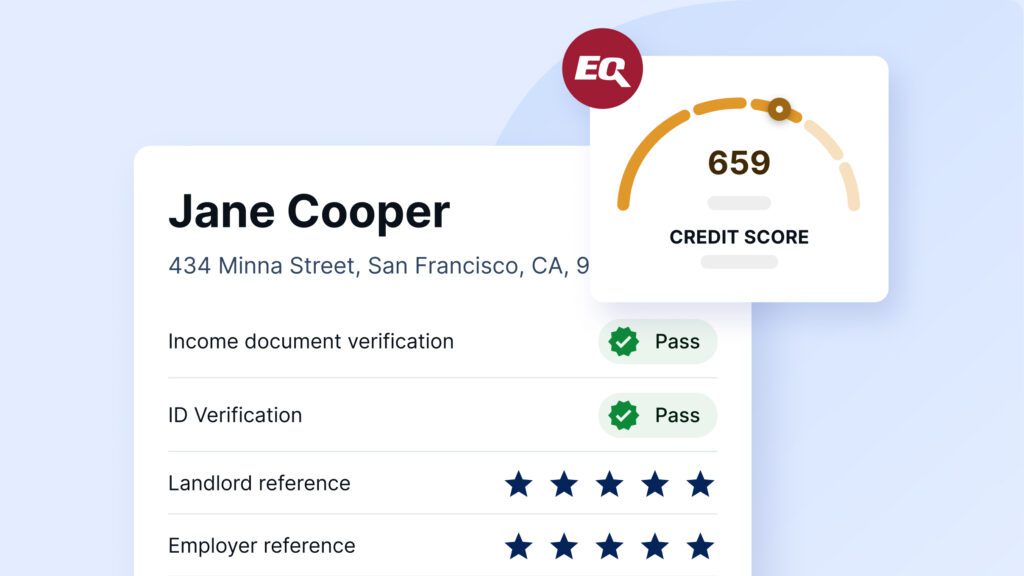
Full credit check by Equifax®, including employment and income information
Landlord and employer reference checks
AI-powered tool that scans your applicant’s income documents for tampering or fraud
Protect against unpaid rent, damage, and eviction costs
See what customers say about Rent Guarantee
Screen tenants, protect rent, and manage your portfolio
Credit, income, background, and eviction checks
Approve more renters and fill vacancies faster
Screen tenants and protect your clients’ rental income
Credit, income, background, and eviction checks
Protect clients against unpaid rent and damage
Full credit check by Equifax®, including employment and income information
Landlord and employer reference checks
AI-powered tool that scans your applicant’s income documents for tampering or fraud
Verify the legitimacy of your applicant’s ID
Qualify tenant inquiries before viewings
Full credit check by Equifax®, including employment and income information
Landlord and employer reference checks
AI-powered tool that scans your applicant’s income documents for tampering or fraud
Verify the legitimacy of your applicant’s ID
Qualify tenant inquiries before viewings
Protect against unpaid rent, damage, and eviction costs
See what customers say about Rent Guarantee
Kentucky, infused with southern charm, boasts unique offerings like the distinguished Kentucky Derby and the colorful city of Lexington. Lexington is also known as the world’s horse capital and is home to more than 400 horse farms. If you own a vacation home or rental unit in Kentucky, learn how to maximize your deductions.
A short-term rental (STR) is a property leased briefly, typically lasting 30 days or fewer. Many travelers source STRs through online platforms such as Airbnb or VRBO. Regulations vary by city in Kentucky; for instance, in Louisville, STR hosts must annually register each property with the Office of Planning & Design Services.
In the United States, the tax year kicks off on January 1 and wraps up on December 31. People are expected to file their individual tax returns on April 15 like clockwork every year.
Property owners who lease their vacation rentals for more than 14 days and earn profits on those rentals must report their rental income every year.
The 14-day rule provides an exemption for taxpayers. It applies to income earned from STRs that are leased for fewer than 14 days a year, meaning you may not need to report this income.
The IRS recommends using the Schedule E Form 1040 or the Form 1040-SR, which are formulated for taxpayers 65 and older in the United States.
Here, you’ll find a step-by-step guide explaining the process of reporting rental income using a Schedule E 1040 Form.
Create a list of all eligible deductions to include on the 1040 Form. This is where the receipts for all rental expenses linked to your vacation rental property and rental activities will come in handy.
To determine whether your income is active or passive, consider your involvement in your rental business. An active income stems from consistently engaging with guests and organizing services such as cleaning and maintenance.
Passive income is generated from activities in which you are not substantially involved, which include rental income or payouts from investments.
When you rent out your vacation home on Airbnb, TurboTax suggests submitting a W-9 Form. If you skip this, they’ll withhold 28% of your rental income for taxes. In most cases, your actual tax owed on rental income is lower than 28%.
Here is an extensive breakdown of reporting income taxes with the 1040 Form.
Tax deductions for short-term rentals in Kentucky include various expenses associated with managing and maintaining the rental property. Mortgage interest and property taxes are deductible because they are considered necessary expenses in owning the rental property. In addition to property taxes, you may be able to include insurance premiums as a deductible expense.
If you are routinely involved in the rental operations, any costs accrued from managing the rental will fall under a deductible expense. Save your receipts on repairs, travel expenses, office deductions, or relevant business expenses, including salaries for your rental property tax deductions. Scheduling a consultation with a tax professional or accountant familiar with Kentucky’s tax laws will help you navigate your first time reporting earnings.
Guests booking VRBO or Airbnb listings in Kentucky will be subject to a 6% Kentucky Sales Tax on reservations lasting 29 nights or fewer, including cleaning fees. Additionally, a 1% Kentucky Transient Room Tax applies to all reservations, inclusive of cleaning fees. For more details, refer to the Kentucky Department of Revenue website.
STR operators must obtain a business license through the Division of Revenue. Each city has its own regulations, and vacation homeowners should familiarize themselves with local laws.
If your deductible rental expenses surpass your rental income, you may eliminate any potential taxable income and potentially incur losses that could provide additional benefits at tax time. The 14-day rule, if you lease a property for fewer than 14 days annually, will exempt you from reporting taxes and claiming deductions.
Understanding the importance of maximizing tax deductions can help you save significantly. If you are figuring out whether to manage a short-term or long-term rental, visit our guide to choose the best path for your needs.