
Credit, income, background, and eviction checks
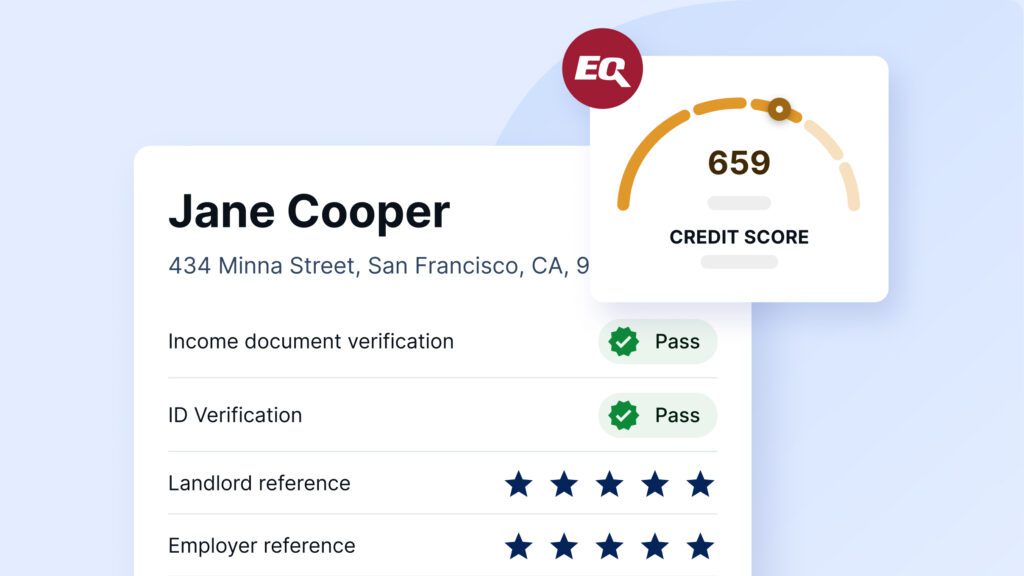
Full credit check by Equifax®, including employment and income information
Landlord and employer reference checks
AI-powered tool that scans your applicant’s income documents for tampering or fraud
Protect against unpaid rent, damage, and eviction costs
See what customers say about Rent Guarantee
Screen tenants, protect rent, and manage your portfolio
Credit, income, background, and eviction checks
Approve more renters and fill vacancies faster
Screen tenants and protect your clients’ rental income
Credit, income, background, and eviction checks
Protect clients against unpaid rent and damage
Full credit check by Equifax®, including employment and income information
Landlord and employer reference checks
AI-powered tool that scans your applicant’s income documents for tampering or fraud
Verify the legitimacy of your applicant’s ID
Qualify tenant inquiries before viewings
Full credit check by Equifax®, including employment and income information
Landlord and employer reference checks
AI-powered tool that scans your applicant’s income documents for tampering or fraud
Verify the legitimacy of your applicant’s ID
Qualify tenant inquiries before viewings
Protect against unpaid rent, damage, and eviction costs
See what customers say about Rent Guarantee
The Great Lakes State is known for its museums and historical sites, Detroit’s urban art, and the serene shores of Michigan’s Upper Peninsula.
If you’re considering turning your primary residence into a vacation haven or have an apartment unit you wish to advertise on VRBO or Airbnb, learn how to get the most from your tax deductions on short-term rentals.
A short-term rental (STR) is a home or unit leased to individuals for fewer than 30 consecutive days. Most people use Airbnb to advertise their property, collect and remit taxes, and provide a log of earnings.
The U.S. tax year typically commences on January 1 and concludes on December 31, with annual individual tax filings expected by April 15. Remember, any rental income you earn is subject to taxation.
According to the 14-day rule, if you rent out your property for 14 days or less during the tax year, you don’t need to report the rental income on your tax return, and you may not deduct rental expenses.
To report earnings on your vacation rental property, use either the Schedule E Form 1040 or the Form 1040-SR, designed for seniors aged 65 and older.
Follow these steps to report rental income using a Schedule E 1040 Form.
Make sure you gather all the required forms for Schedule E. These forms are essential for reporting your rental income and any related expenses accurately. By ensuring you have all the necessary paperwork, you can streamline the process of reporting your earnings and deductions during tax time.
In rental property ownership, it’s essential to determine if you are earning an active or passive income stream. This will help you list your deductible expenses.
Passive income typically involves minimal effort in leasing out properties, while active income entails hands-on guest services management that qualifies as a business.
If you list your vacation property on Airbnb, send a W-9 Form to Airbnb. If you skip this step, the company can legally withhold 28% of your rental income for taxes during the entire tax year.
Your actual tax liability on rental income will be less than 28%. Once you’ve submitted the W-9 Form to Airbnb, report your earnings and deductible expenses on your 1040 Tax Form.
Explore our guide for more detailed information on how to report your rental income using a Schedule E 1040 Form.
Homeowners can deduct various expenses, including certain depreciation deductions, mortgage interest rates, and other relevant rental costs. Consulting with a tax professional is highly recommended to ensure you identify and take advantage of all available tax benefits.
Here’s a breakdown of potential deductions you might qualify for, whether you’re earning passive income or actively managing rental operations:
Michigan residents may qualify for the state’s Homestead Property Tax Credit, which can help them pay some of their property taxes if they are qualified Michigan homeowners or renters and meet the requirements. They should complete the Michigan Homestead Property Tax Credit Claim MI-1040CR to see if they qualify for the credit.
The Michigan lodging tax is 6%, including the cleaning fee, for reservations lasting 30 nights or less. Accommodations such as hotels, trailer camps, tourist camps, and rooming houses are subject to a 9% lodging tax.
Yes, if a property owner rents their home for longer than 15 consecutive days annually.
Those renting a home, and sometimes vacation rental property, can get a tax break called a credit. This credit is based on a percentage of the rent they paid. So, if you rent a place, you might get some money back on your taxes based on how much rent you paid.
Renting out a short-term rental property can yield significant profits, particularly when leveraging tax deductions related to rental activity and property taxes. Unsure about managing a long-term rental or a property with shorter leasing periods? Consult our guide to find the best fit for your situation.