
Credit, income, background, and eviction checks
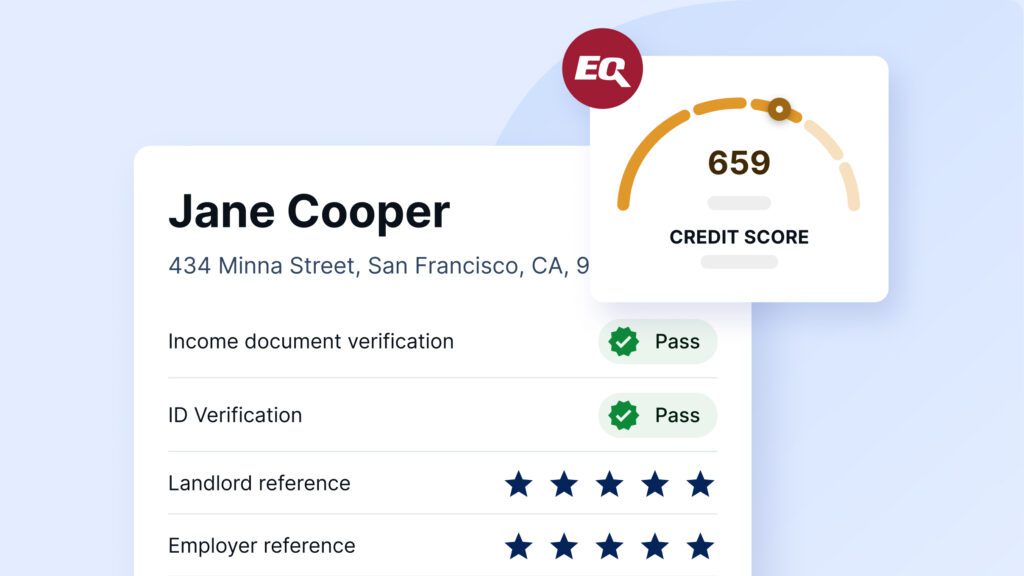
Full credit check by Equifax®, including employment and income information
Landlord and employer reference checks
AI-powered tool that scans your applicant’s income documents for tampering or fraud
Protect against unpaid rent, damage, and eviction costs
See what customers say about Rent Guarantee
Screen tenants, protect rent, and manage your portfolio
Credit, income, background, and eviction checks
Approve more renters and fill vacancies faster
Screen tenants and protect your clients’ rental income
Credit, income, background, and eviction checks
Protect clients against unpaid rent and damage
Full credit check by Equifax®, including employment and income information
Landlord and employer reference checks
AI-powered tool that scans your applicant’s income documents for tampering or fraud
Verify the legitimacy of your applicant’s ID
Qualify tenant inquiries before viewings
Full credit check by Equifax®, including employment and income information
Landlord and employer reference checks
AI-powered tool that scans your applicant’s income documents for tampering or fraud
Verify the legitimacy of your applicant’s ID
Qualify tenant inquiries before viewings
Protect against unpaid rent, damage, and eviction costs
See what customers say about Rent Guarantee
Virginia attracts visitors from everywhere due to its thriving cultural scene mixed with its heritage, personifying the quintessential spirit of the American South.
If you own and lease vacation homes in Virginia, learn how to capitalize on tax deductions.
Short-term rentals (STRs) are accommodations typically rented for fewer than 30 days. They cater to tourists or business travelers seeking temporary lodging and are usually found in online marketplaces like Airbnb and VRBO.
In the U.S., the tax year runs from January 1 to December 31, with tax returns typically due by April 15. The Internal Revenue Service (IRS) taxes rental income, including from STRs. Rental property owners need to report their income accurately to avoid future audits. A tax professional can advise on whether additional forms, like a W-9 Form, are necessary for platforms like Airbnb and VRBO.
If STR guests lease your vacation rental properties for more than 14 days annually, you must report these earnings since the IRS deems STR earnings taxable income.
Under the 14-day rule, if the rental period is 14 days or less per year, you don’t have to report this rental income and can’t claim deductions.
Use the Schedule E Form 1040 or the Form 1040-SR, tailored for individuals aged 65 and older. Consult our guide for a comprehensive overview of the rental income reporting process using the Schedule E 1040 Form, ensuring accurate information. This guide covers everything from income or loss from estates and trusts to real estate mortgage investment conduits.
Follow these three steps to help break down the process.
Having a written record of the time spent on repairs and maintenance, along with the associated costs for rental activity, is crucial. Make reporting easier by creating a list of itemized deductions to include on the 1040 Form.
Determining whether income is passive or active hinges on how engrossed you are in managing and providing services for your guests. Passive income usually requires minimal day-to-day engagement, often through online booking platforms like Airbnb and VRBO. On the flip side, active income involves a more hands-on approach, when you invest significant effort to generate income from rentals.
Here are some examples of running a short-term rental business:
Report your earnings using the 1040 Form to itemize your deductible expenses. For those relying on Airbnb to promote their rental and collect and remit lodging taxes, submit a W-9 Form to Airbnb before sending the IRS your 1040. Sometimes, Airbnb will withhold 28% of your earnings if you don’t submit a W-9 Form.
When it comes to short-term rentals in Virginia, hosts can benefit from several key tax deductions on their income tax returns to lower tax burdens and boost earnings.
These deductions may include:
On May 1, 2021, the transient occupancy tax, or lodging tax, increased by 3% in Virginia. The total tax you pay 9.5% of the room rental charge, plus an extra $1.25 for each room per night. The sales tax rate for the majority of locations in Virginia is 5.3%.
In Virginia, you are responsible for collecting a lodging tax if you rent out a short-term rental. Each city harbors different rules, so you must familiarize yourself with local laws to ensure you abide by them. For example, in Norfolk, you must have a Registration Zoning Permit or Conditional Use Permit.
To keep everyone safe, owners of short-term rental properties in Virginia must follow the Virginia Department of Health rules. These rules ensure that the place is safe for people who stay there and for the neighborhood. Owners must ensure they have the right permits from VDH and follow all the regulations they’ve set.
Renting out a short-term rental property can bring in good money, especially when you understand how to use tax deductions to your advantage. If you’re not sure about handling the long-term commitments of traditional rentals or the challenges of operating a short-term rental business, our guide can help you decide what suits you best.