
Credit, income, background, and eviction checks
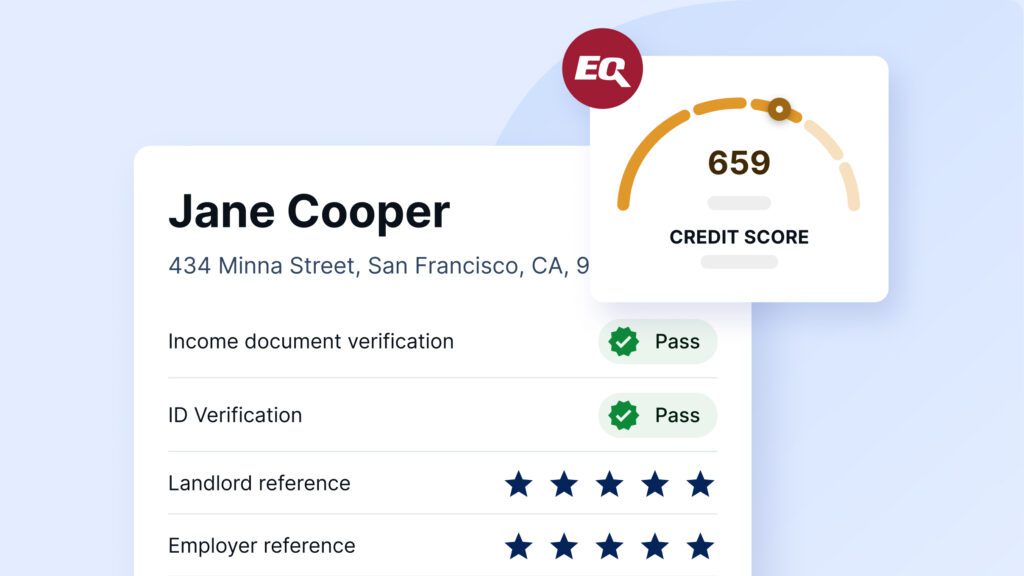
Full credit check by Equifax®, including employment and income information
Landlord and employer reference checks
AI-powered tool that scans your applicant’s income documents for tampering or fraud
Protect against unpaid rent, damage, and eviction costs
See what customers say about Rent Guarantee
Screen tenants, protect rent, and manage your portfolio
Credit, income, background, and eviction checks
Approve more renters and fill vacancies faster
Screen tenants and protect your clients’ rental income
Credit, income, background, and eviction checks
Protect clients against unpaid rent and damage
Full credit check by Equifax®, including employment and income information
Landlord and employer reference checks
AI-powered tool that scans your applicant’s income documents for tampering or fraud
Verify the legitimacy of your applicant’s ID
Qualify tenant inquiries before viewings
Full credit check by Equifax®, including employment and income information
Landlord and employer reference checks
AI-powered tool that scans your applicant’s income documents for tampering or fraud
Verify the legitimacy of your applicant’s ID
Qualify tenant inquiries before viewings
Protect against unpaid rent, damage, and eviction costs
See what customers say about Rent Guarantee
Wisconsin, known for its dairy production, boasts two Great Lakes––Michigan and Superior––stunning natural beauty, and a trendy brewing culture.
Learn how to maximize your tax deductions on short-term rentals (STRs) in America’s Dairyland.
Rental property owners who lease out rooms, homes, cabins, or other short-term lodging for overnight stays to the public for a fee must adhere to specific laws and regulations mandated by the state of Wisconsin.
Short-term rentals are lodgings rented for fewer than 30 days. They are popular among tourists and business travelers seeking temporary accommodations and are often listed on platforms like Airbnb and VRBO.
The tax year extends from January 1 to December 31, with tax returns usually due by April. The Internal Revenue Service (IRS) considers earnings from STRs taxable income. Accurate income reporting is essential to avoid audits. Consult a tax expert for advice on additional forms, like the W-9 Form, which are needed for platforms like Airbnb and VRBO.
You always have to report earnings to the IRS. However, there is a 14-day rule that exempts you from treating your property as an income-generating rental property for tax purposes.
If guests lease your vacation rental properties for more than 14 days annually, you must report these earnings as the IRS considers them taxable income.
Use the Schedule E Form 1040 or the Form 1040-SR for individuals 65 and older. Our guide will help you understand accurate rental income reporting with the Schedule E Form. It covers everything, from estates and trusts to real estate investment conduits.
These three steps will help you get started on reporting with a Schedule E:
Maintaining written records of all your rental activities, including costs related to repairs and maintenance, is essential. Simplify reporting by compiling an itemized list of deductions to include on the 1040 Form.
Your STR income’s classification as passive or active depends on your management involvement. Active income includes hands-on tasks like bookings and maintenance, while passive income requires minimal involvement, such as hiring a property manager or using Airbnb. This distinction can affect tax treatment and deductions.
The 1040 Form will help you declare your income and itemize deductible expenses. If you rely on Airbnb for rental promotion and tax remittance, you may need to submit a W-9 Form to Airbnb before filing your 1040 with the IRS.
Wisconsin short-term rental tax deductions may cover property upkeep, utilities, insurance, management, cleaning, advertising, and mortgage interest. Additionally, you may be eligible to deduct expenses for furnishings, supplies, property taxes, and depreciation. Seek advice from a Wisconsin tax professional to maximize deductions and stay compliant.
Guests who book Wisconsin vacation rentals through an online platform like Airbnb or VRBO will pay the following taxes:
In Green Bay, the room tax rate is 10% of the listing price, including cleaning and guest fees. In Racine, the room tax is 8%.
Property owners operating short-term vacation rentals or tourist rooming houses must obtain a permit. Tourist rooming houses include vacation homes and exclude private boarding homes or bed and breakfasts in Wisconsin.
Operators can rent up to four units under a tourist rooming house license. Five or more units require a hotel license. Licenses issued by the Wisconsin Department of Agriculture, Trade and Consumer Protection (DATCP) expire on June 30 yearly. License dates run from July 1 of one year to June 30 of the following year. If a license is granted after April 1, it extends to June 30 of the following year. Renewal fees are due before June 30 each year for existing establishments.
The license fee is $110.
Wisconsin short-term rental properties may have varying and developing rules in each city. Property owners need to stay abreast of emerging laws on STRs.
Renting out a short-term rental property can be lucrative, particularly if you leverage tax deductions effectively. If you’re on the fence about whether to manage a traditional long-term rental or short-term rental business, our guide can assist you in determining the best plan for you.