“For Rent by Owner” (FRBO) is a rental arrangement in which you assume the role of the landlord as the property owner. That means you deal with tenants directly and manage every step of the rental process, rather than outsourcing the work to a third party.
As a private landlord, your duties include advertising your property, screening prospective tenants, and drawing up the lease agreement. You’re also responsible for resolving disputes with tenants and handling routine tasks, such as making repairs and keeping the property in good condition.
Renting out your property without any middlemen offers several benefits: cost savings, independence, control, and the chance to build personal connections with tenants. However, it’s also time-consuming, demanding, and stressful, especially if you lack the knowledge to find, vet, and retain quality tenants.
Human rights laws in Canada prohibit discrimination based on “protected grounds” such as race, religion, gender, disability, ethnicity, family status, and source of income. These laws apply during each step of the tenant screening process to ensure everyone has a fair chance of renting a property.
As a landlord, you must follow the human rights legislation in your province or territory when screening potential tenants. These rules dictate the types of questions you can ask, the information you can request, and the criteria you can use to evaluate candidates.
Build a fair and objective screening process to ensure compliance with human rights laws. Use a standardized rental application, apply consistent benchmarks, choose tenants based on objective criteria, and document your decision-making process.
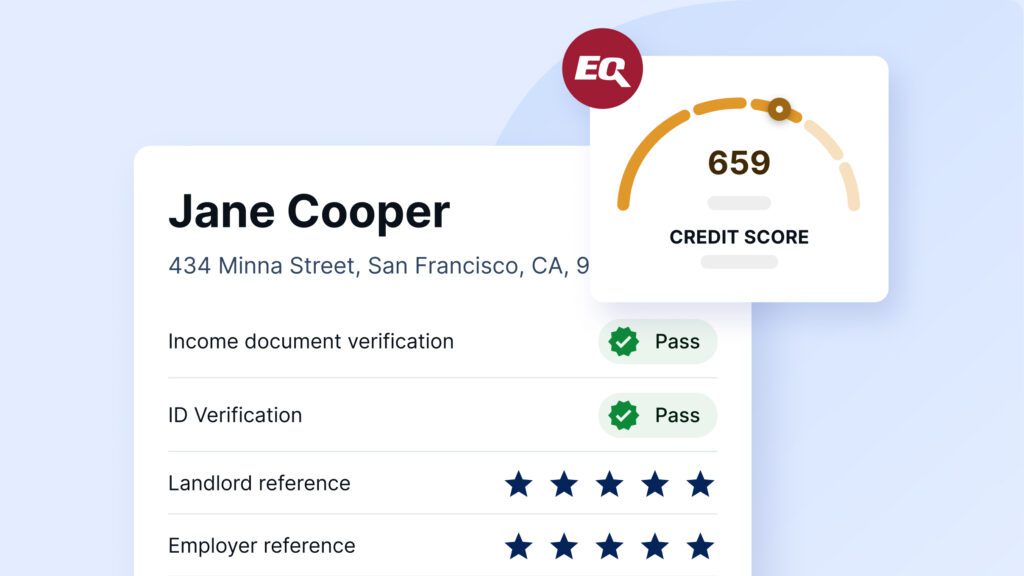
SingleKey’s ID Verification helps landlords confirm that rental applicants are who they claim to be, reducing the risk of identity fraud.
To verify their identity, a rental applicant must upload a copy of a government-issued photo ID and take a selfie. SingleKey’s ID Verification system will check if the document is genuine and matches the individual in the selfie.
You can view the results of the ID Verification test for your applicant by logging into your SingleKey account and reviewing their Tenant Report.
Pre-screening is the first step in the tenant screening process. It’s a quick assessment that asks applicants basic questions to determine whether they meet your minimum criteria. By filtering out those who are a poor fit, you can focus on evaluating those who are most qualified.
A rental application gathers more detailed information about potential tenants than pre-screening, allowing you to conduct a more thorough assessment. These include employment status, proof of income, rental history, references, and past landlord references.
Always conduct a pre-screening interview before moving on to the rental application stage. If an applicant meets your minimum requirements, have them attend a property viewing and ask them to complete the rental application. Be sure to explain what the rest of the screening process entails and answer any questions they might have.
The ID Verification is a feature of SingleKey’s tenant screening process. When ordering a Tenant Report, you can request applicants to confirm their identity by providing a government-issued ID and taking a live selfie.
The ID Verification performs five checks to verify a potential tenant’s identity: name match, date of birth match, photo ID review, selfie review, and side-by-side comparison of the photo ID and selfie.
SingleKey’s ID Verification tool is powered by AI, ensuring accurate, reliable results. The verification process is simple, fast, and secure, with results delivered straight to your Single account.
Do you struggle with marketing your rental property to land a quality tenant? If so, artificial intelligence (AI) can help you get the job done. Whether writing an engaging rental ad or handling questions from potential tenants, AI can automate and simplify the process, boosting your productivity, saving you money, and giving you an edge over the competition.
AI chatbots like ChatGPT can help you create a compelling rental listing and social media posts that spark interest from renters. Virtual staging software can enhance your property’s photos with sleek furniture and décor, helping you attract even more attention to your ad.
AI can act as your virtual assistant, freeing you from tedious and mundane tasks. It can book showings of your property, respond to inquiries from potential tenants, and handle other administrative duties.
“For Rent by Owner” (FRBO) is a rental arrangement in which you assume the role of the landlord as the property owner. That means you deal with tenants directly and manage every step of the rental process, rather than outsourcing the work to a third party.
As a private landlord, your duties include advertising your property, screening prospective tenants, and drawing up the lease agreement. You’re also responsible for resolving disputes with tenants and handling routine tasks, such as making repairs and keeping the property in good condition.
Renting out your property without any middlemen offers several benefits: cost savings, independence, control, and the chance to build personal connections with tenants. However, it’s also time-consuming, demanding, and stressful, especially if you lack the knowledge to find, vet, and retain quality tenants.
The 1% rule is a helpful guideline for calculating your baseline rent price. Multiply the purchase price of your home (plus the cost of any necessary renovations and repairs) by 1%. The result is the minimum amount you should charge tenants to stay profitable.
Ensure your rent price is appropriate for your property type, taking into account its location, condition, and amenities. Research the rates that landlords in your area are charging for properties similar to yours to ensure your price aligns with market expectations.
Stay informed about trends in the rental market and the broader economy. Be willing to adjust your price as necessary to stay competitive. When advertising your rental, always highlight its best features and perks to justify the price you’re charging.
A capital gain is the profit you earn when you sell your rental property for more than you originally paid.
A short-term capital gain occurs when you sell your rental after holding it for a year or less; it is taxable at your ordinary tax rate. Long-term capital gains apply to sales where you owned the rental for over a year; these are taxable at 0%, 15%, or 20%, depending on your taxable income.
Several strategies exist for minimizing capital gains taxes. These include using a 1031 tax-deferred exchange, applying losses from other investments against your profit, and converting your rental into a primary residence.
A capital gain on a rental property occurs when you sell it for more than you originally paid to purchase it.
In Canada, 50% of capital gains are taxable. You must add the capital gain from your rental sale to your annual income and pay tax on it at your marginal tax rate (the income tax bracket you fall under).
You can employ strategies to reduce your capital gain tax liability. These include claiming specific rental property deductions, contributing your profit to an RRSP, and offsetting it using a capital loss. It’s also wise to postpone your property’s sale to a year in which you earn a low income.
Before raising your rent, it’s crucial to send your tenants a rent increase letter notifying them of your decision. This document helps you to maintain transparency, minimize disputes, and ensure compliance with local tenancy laws.
A rent increase letter must include specific details in line with your region’s tenancy laws, and to avoid misunderstandings with tenants. These include the new rent amount, the effective date of the increase, your signature, and the date it was created. You may also need to create it using a government-approved form.
Learn much notice you need to give your tenants of an upcoming rent increase under the tenancy laws in your area. Ensure they receive your rent increase letter within the required notice period and use a safe, verifiable delivery method, such as certified mail.
Concerned about how a SingleKey credit check will affect your credit score? The good news is that SingleKey only runs soft checks on potential tenants, so your credit score will stay intact.
Hard credit inquiries cause a temporary dip in your credit score and remain on your credit report for several years, visible to anyone who views it. Soft inquiries have no impact on your score and are visible only to you.
SingleKey performs credit checks as part of its Tenant Report, available to both landlords and renters. As a renter, you can also complete a soft credit check when creating a Universal Tenant Application, a digital tenant profile that you can share with multiple landlords when applying for tenancy.