“For Rent by Owner” (FRBO) is a rental arrangement in which you assume the role of the landlord as the property owner. That means you deal with tenants directly and manage every step of the rental process, rather than outsourcing the work to a third party.
As a private landlord, your duties include advertising your property, screening prospective tenants, and drawing up the lease agreement. You’re also responsible for resolving disputes with tenants and handling routine tasks, such as making repairs and keeping the property in good condition.
Renting out your property without any middlemen offers several benefits: cost savings, independence, control, and the chance to build personal connections with tenants. However, it’s also time-consuming, demanding, and stressful, especially if you lack the knowledge to find, vet, and retain quality tenants.
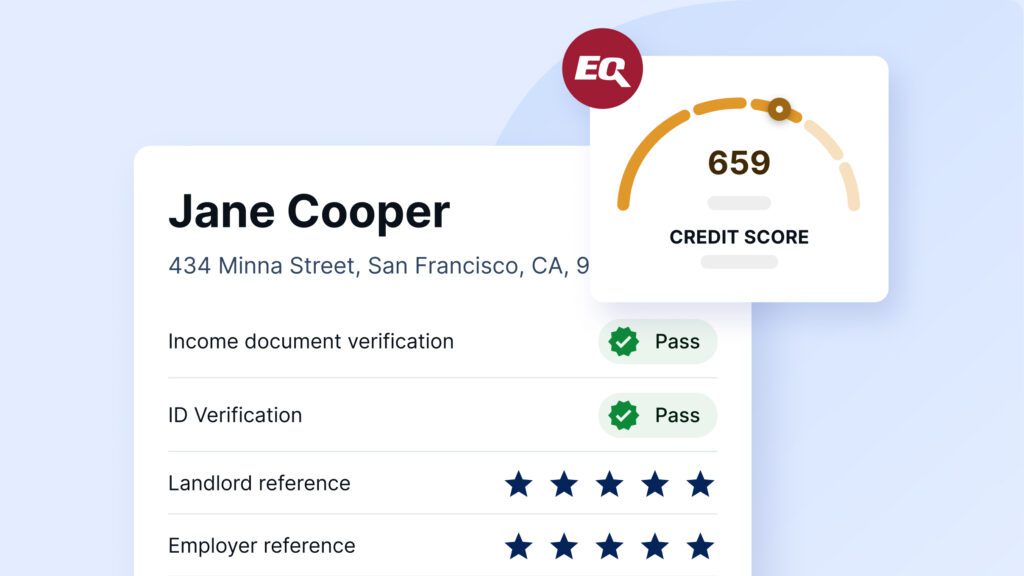
A credit score between 640 and 699 is considered a good score based on most credit scoring systems. As a landlord, you can use this range as a guideline when assessing a potential tenant’s ability to pay rent on time.
Credit scores range between 300 and 900, depending on the scoring model used. Most models categorize credit scores as poor, fair, good, very good, and excellent, allowing for a quick assessment of an individual’s credit standing. The higher the score, the more financially stable and reliable the individual.
The most critical factors that influence credit scores are payment history, credit utilization, credit mix, length of credit history, and the number of recent accounts opened.
A hard credit check occurs when an individual or company reviews your credit report to determine whether to approve you for a loan. Hard checks remain on your credit report for several years and can lower your credit score.
A soft credit check is done to prequalify you for a loan or non-borrowing purposes, such as an employee background check. It provides limited information about your credit health and serves no role in the actual approval process. Soft credit checks don’t impact your credit score.
When a landlord pulls your credit report as part of a rental application, the probe counts as a soft check. This means your credit score won’t be affected, no matter how often landlords request to view your credit history.
Never assess a rental applicant solely on their credit score. Instead, use a comprehensive tenant screening report to collect and consider details about their past employment, rental history, and publicly available information such as court appearances or problematic behavior.
Due diligence is always the responsibility of the landlord or property manager; it’s the most important step of tenant screening. Don’t skip it!
When screening a tenant, compare the information received on the tenant’s application and validate it against a tenant screening report from trusted sources.
Credit report codes, also known as credit ratings, describe how and when an individual makes payments on their debts. The most common credit report code is the R code, with the “R” meaning revolving. An example of revolving credit is a credit card.
Credit report codes consist of a letter and a number. The letter represents the type of credit product, and the number explains the account’s payment status. The higher the number, the further behind the individual is on the payment for that particular account.
As a landlord, understanding credit report codes can help you assess a tenant’s financial stability. You can safeguard your rental income by choosing applicants less likely to default, as evidenced by their payment history.
According to a recent survey, the biggest red flag for landlords is an insufficient income or an unstable employment history.
Negative references from previous landlords are the second biggest concern for property managers.
An online tenant screening process will save landlords time and give them insights into each applicant to see if they can afford to make rent payments and will potentially be dream tenants.
In a recent survey, 50 percent of landlords said they prefer to use an online service to screen tenants.
Most landlords find that exclusively checking references is insufficient in protecting their investment property.
With a comprehensive tenant screening report, landlords can see if a rental applicant has outstanding debt, poor credit history reports, unsavory criminal background reports, or eviction history at an affordable price.
Speaking with a rental applicant’s current and previous landlords is a good place to start when gathering helpful details about a person’s character and background.
Be sure to ask if the tenant paid rent on time, maintained the property, and provided proper notice when moving out. Include open-ended questions to uncover additional details about the tenant that you could have otherwise missed.
Not all landlord references are reliable. There may be underlying circumstances that could skew a landlord’s perspective. Consider all factors when conducting a landlord reference check.
Disruptive tenants, unpaid rent, and property damage are common fears for landlords.
The results of a SingleKey survey indicate that unpaid and late rent are among the most significant concerns for landlords and realtors managing investment properties.
With tenant screening reports, landlords can differentiate prospective tenants with stellar references from tenants with unfavourable rental histories.
A practical and thoughtful system for managing rental application forms can make tenant screening a breeze.
The rental application process should include pre-screening interviews to help you narrow the field and clear communication of your requirements for those who make the cut.
Make your rental application form easily accessible online, request only essential information from tenants, and store all documents you receive in a secure and centralized location.
Property managers in Canada must navigate rental and tenant screening laws that may vary across provinces.
Understanding the tenant screening laws regulated by the Canadian Human Rights Act is crucial for a smooth screening process and to establish a good tenant-landlord relationship.
Fair and non-discriminatory tenant screening practices benefit landlords and tenants.